
Tank Floor and Leak Investigation acoustic emission testing
Can active leakage or an accessible tank-bottom zone be assessed under the available conditions? Review feasibility, expected output and limitations with IAIS.
The inspection question
Can active leakage or an accessible tank-bottom zone be assessed under the available conditions?
Tank bottoms, floor-to-shell regions and associated connections when access and acoustic paths permit.
This page describes a technically possible application. Final IAIS service availability, procedure, personnel and equipment are confirmed only after the asset-specific enquiry is reviewed.
How this application can work
Potential acoustic sources
Leak flow or active damage can emit signals, but interpretation depends strongly on product level, floor contact, soil or foundation, operating noise and sensor placement.
Conditions required for a meaningful test
Define whether sensors can be placed on the floor or other valid locations. Distinguish structural activity, leak flow, rain, pumping, turbulence and contact noise. Assess applicable tank standards separately.
What the client can receive
A documented feasibility decision or an interpreted map of activity within the validated sensor coverage.
Limits and follow-up
Confirm with suitable floor scanning, vacuum-box testing, hydrotest, visual inspection or other approved leak examination. No generic AET setup covers every tank floor.
From enquiry to project scope
Send the asset drawing and material specification, operating and design data, previous inspection records, suspected mechanism, available access, proposed test window and applicable client or regulatory requirements. A feasibility review can then establish sensor coverage, loading or monitoring conditions, background-noise controls, procedure, evaluation criteria and the role of complementary inspection.
Relevant technical reference
ASTM E1930/E1930M; ISO 18081:2024 where leak detection applies. View publisher information. The current edition and its exact scope must be checked before a project procedure is agreed.
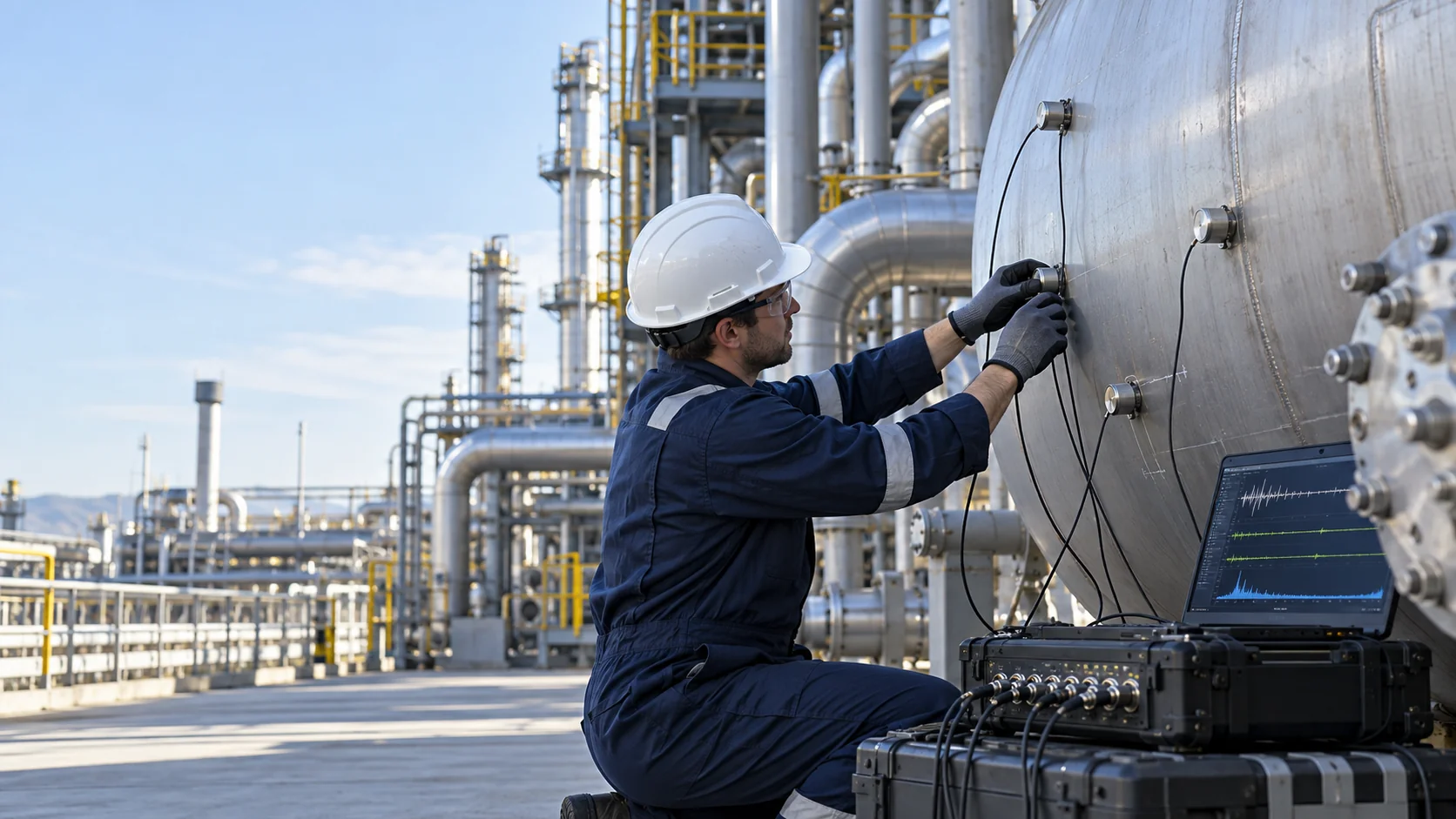
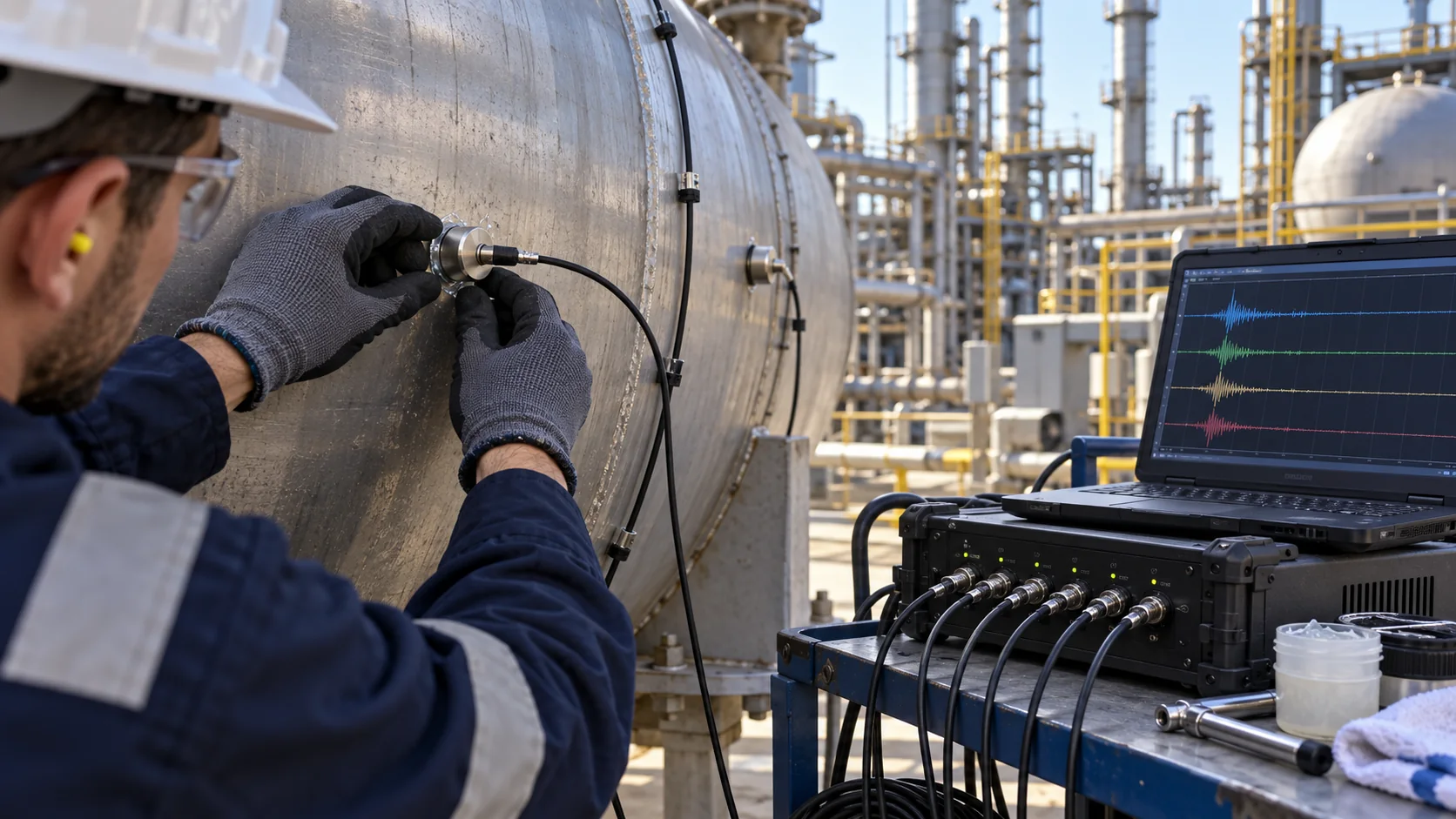
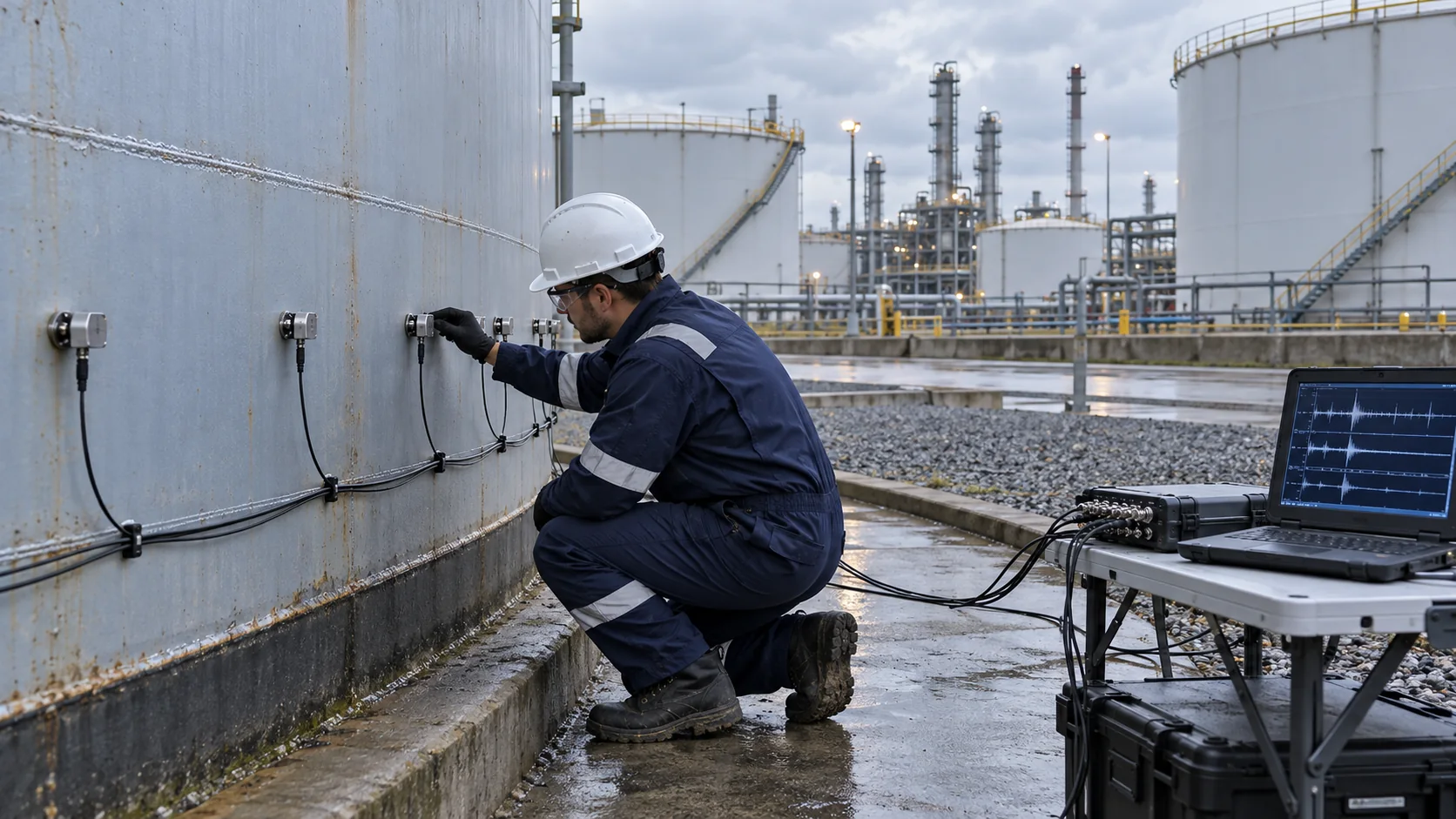
Acoustic emission testing in industrial environments
Sensor placement, test conditions and data acquisition are planned around the specific asset and inspection objective.
Discuss your inspection objective
Send the asset type, location, operating conditions and proposed loading or test window. We can review the information before defining a project-specific scope.