
Application-oriented acoustic emission inspection solutions
Explore IAIS AET solution pathways for screening, leak investigation, pressure-test monitoring, targeted follow-up and longer-term monitoring.
Choose the decision you need to make
Screen active zones
Monitor a defined asset during appropriate loading and prioritize localized investigation where validated activity occurs.
Investigate a suspected leak
Evaluate whether a pressure-difference-driven signal can be detected and distinguished from normal operating noise.
Monitor a pressure test
Record acoustic activity against an approved pressure-test sequence, then investigate relevant sources within the governing acceptance process.
Trend an operating asset
Use a repeat or extended baseline to identify changes in activity, with instrument checks and agreed alarm response.
Evaluate a composite asset
Apply material-specific loading and interpretation to an FRP tank, vessel or other relevant component.
Support a structural decision
Correlate active signals with known loads and follow them with structural engineering and localized NDT.
A solution is a sequence, not a single instrument reading
IAIS can discuss a project-specific route from objective and feasibility to an agreed AET method, data review and complementary inspection. Whether a particular field service can be offered is confirmed in the proposal after personnel, equipment, access, standard and site constraints are checked.
For example, a tank concern may begin with an operating review and sensor-coverage plan, then move to monitored filling and a mapped follow-up using the method appropriate to the affected region. A pressure-vessel question may use a controlled loading cycle and then targeted UT or PAUT if a source requires characterization. Neither sequence promises detection of every defect.
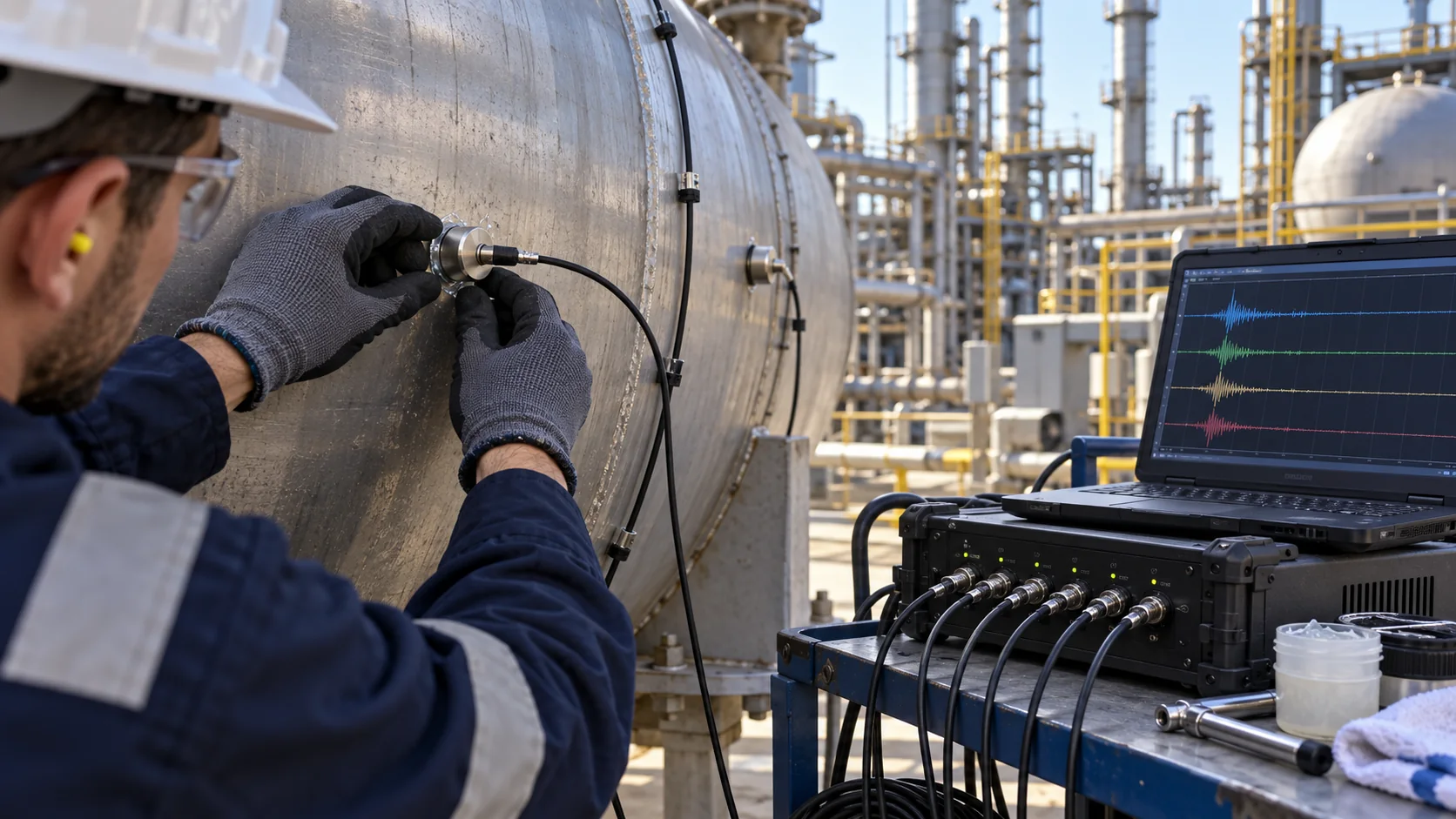
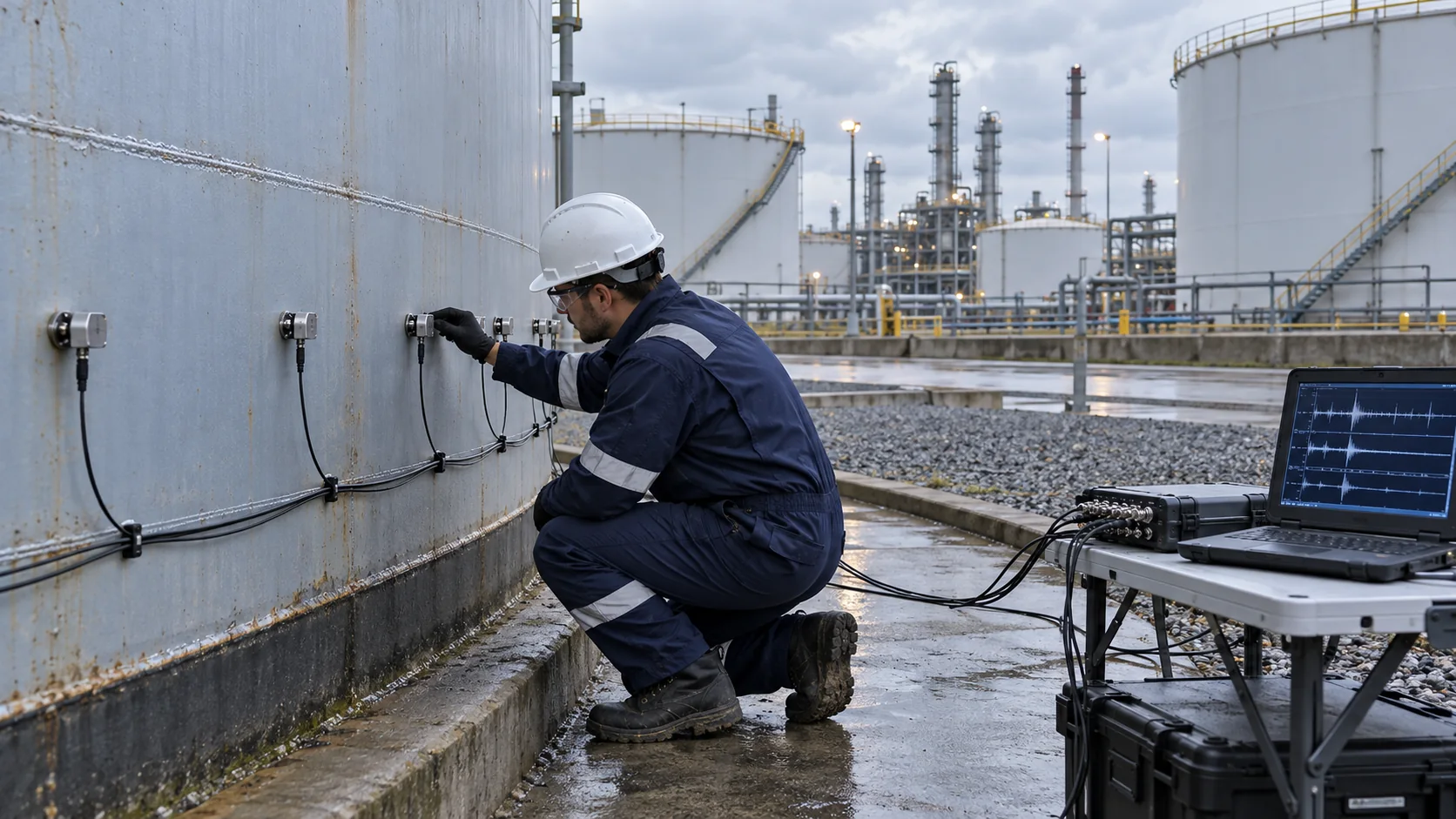
Acoustic emission testing in industrial environments
Sensor placement, test conditions and data acquisition are planned around the specific asset and inspection objective.

Discuss your inspection objective
Send the asset type, location, operating conditions and proposed loading or test window. We can review the information before defining a project-specific scope.