
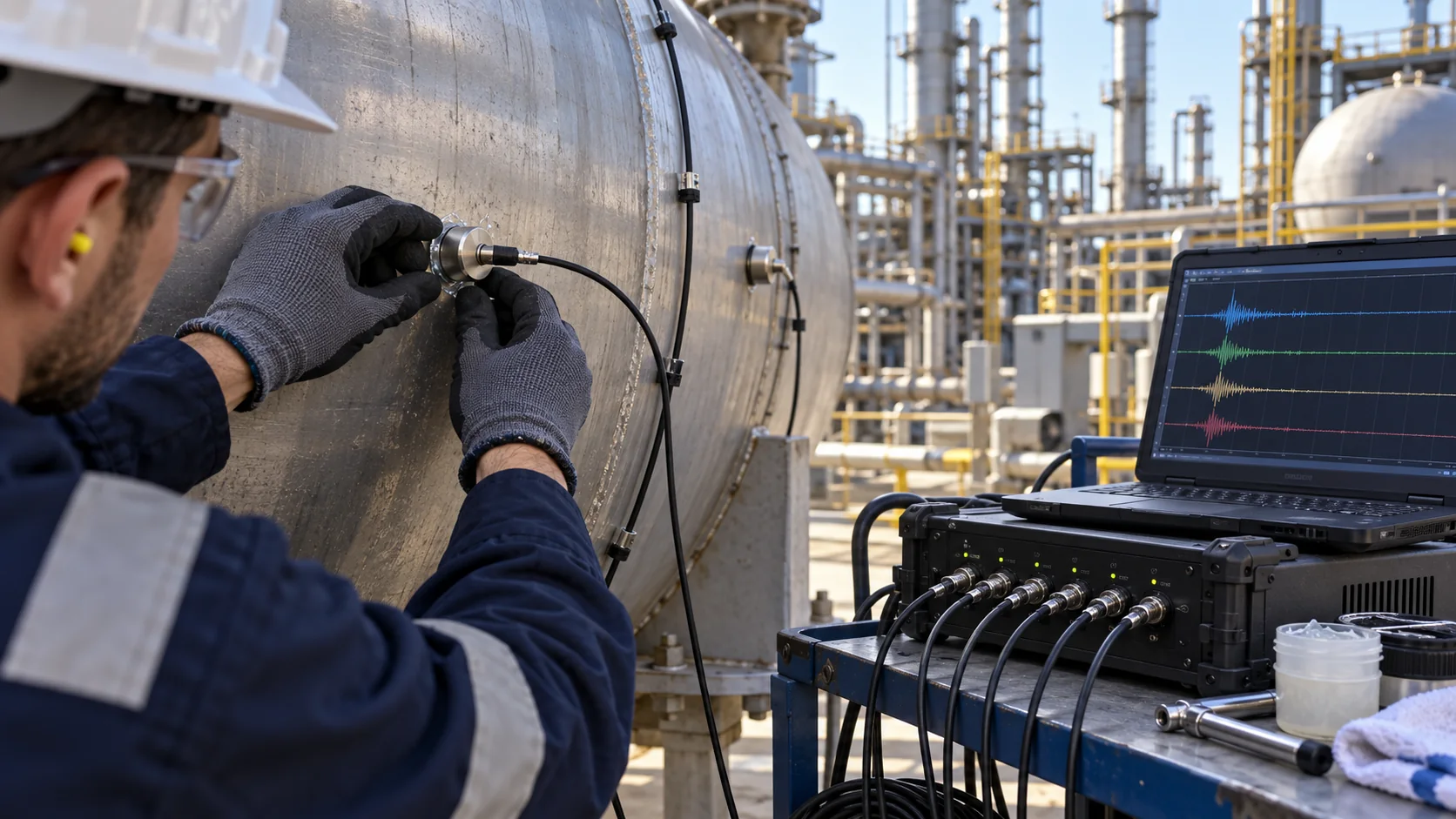
Geometry, material, access, loading and background noise are reviewed before scope confirmation.
Acoustic activity is interpreted together with the defined operating or loading condition.
Coverage, test record, quality checks and prioritized follow-up are documented clearly.
A project-specific service route
AE leak investigation begins with a defined question: Can leak flow be heard and distinguished from the surrounding process?
The service scope is developed from the asset drawing and history, the relevant material and geometry, site access, a safe loading or monitoring condition, and the decision required by the client. The agreed procedure identifies the applicable standard, monitored zones, instrumentation checks, data to retain and evaluation basis.
Typical candidate assets include pressure vessels, piping, valves, tanks and other components where a pressure difference drives leakage. Feasibility and mobilization are confirmed for each enquiry.
What the inspection team would plan
1 · Pre-inspection review
Identify the medium, pressures, operating state, expected leak size, accessible surface and competing flow noise. A method-specific demonstration may be needed before a detection claim.
2 · Measurement setup
Document sensor locations and coupling; verify channels, timing, response and background noise. Record the stimulus alongside event data so the result can be interpreted in context.
3 · Data evaluation
Localized acoustic activity associated with the defined test state, confidence and coverage limits, and a recommendation for confirmatory leak testing.
4 · Targeted next step
Confirm the leak and quantify tightness with the contractually required method. AE signal intensity is not automatically a calibrated leak rate.
Scope and deliverables
A proposal should state the monitored boundary, site preparations, access and utilities, the pressure or operating sequence, applicable procedure and evaluation criteria. Reporting can include sensor layout, quality checks, loading history, event and location analysis where justified, an explicit coverage statement and recommendations for local examination.
AE responds to activity during the recorded condition. A silent interval cannot establish freedom from dormant defects; a located source is not a measured flaw size. A separate application guide explains how these limits apply to acoustic emission leak detection.
Read the Acoustic Emission Leak Detection application guide → · Review the technical approach →
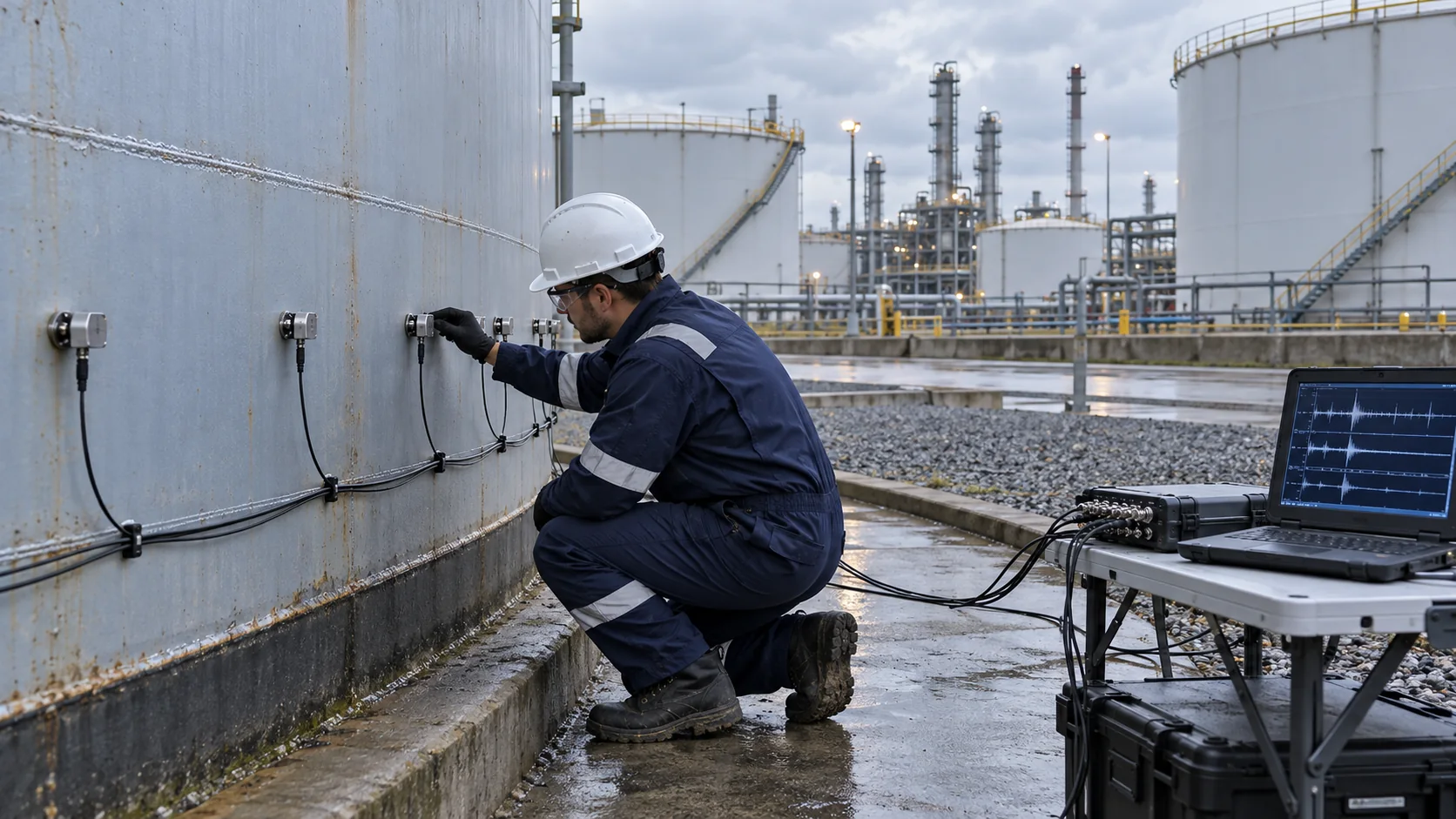
Acoustic emission testing in industrial environments
Sensor placement, test conditions and data acquisition are planned around the specific asset and inspection objective.

Discuss your inspection objective
Send the asset type, location, operating conditions and proposed loading or test window. We can review the information before defining a project-specific scope.